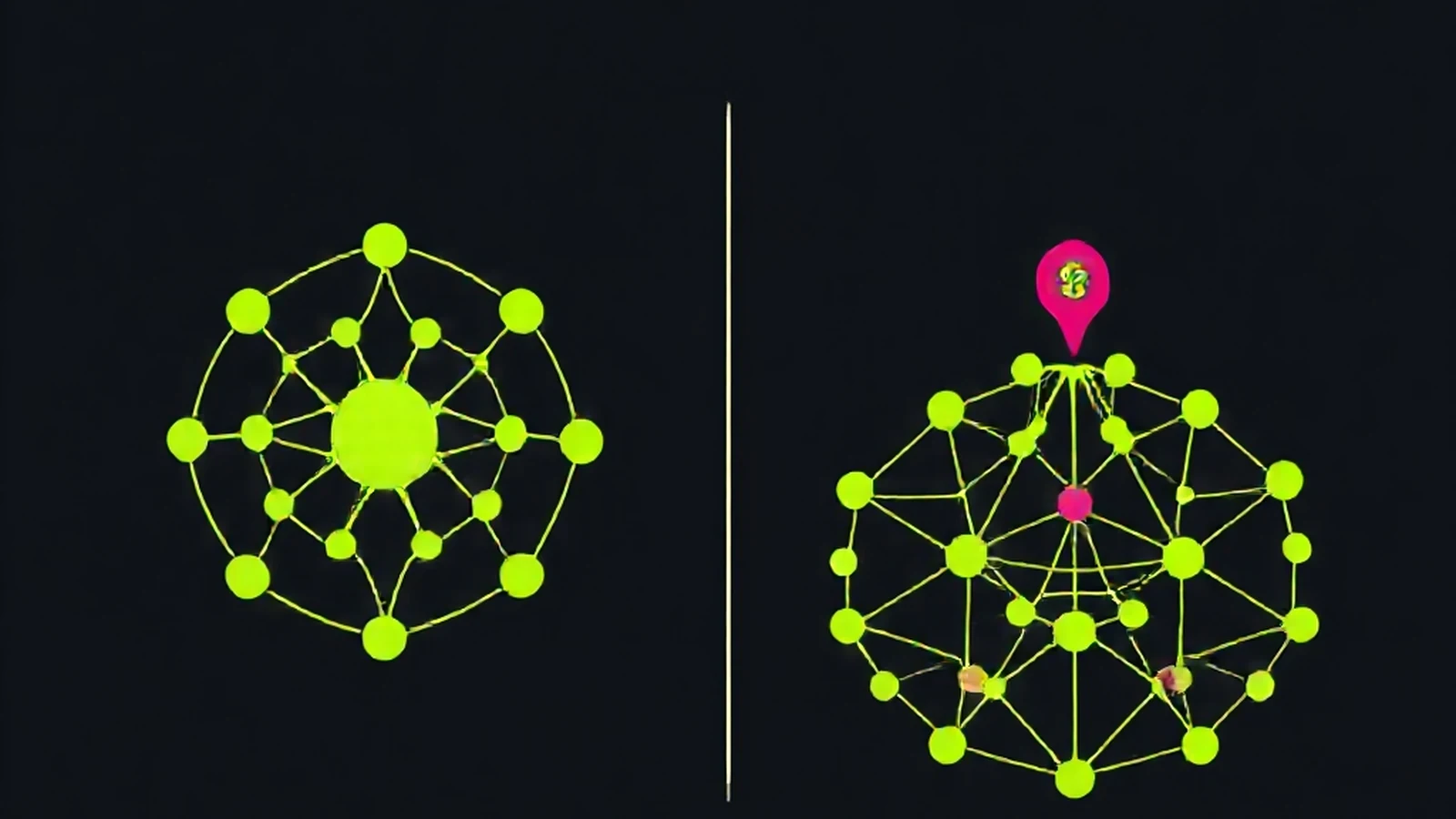
“Coin” and “token” get used interchangeably in casual conversation, but they describe genuinely different things — and for memecoins specifically, which one you’re looking at changes what’s actually possible for that asset technically.
{{IMAGE:assets/images/cointoken-featured.webp}}
What makes something a coin vs. a token
A coin has its own independent blockchain — its own network of validators or miners, its own consensus rules, its own native currency securing that network. A token is issued on top of someone else’s blockchain, using that chain’s existing infrastructure and security rather than building new infrastructure of its own. Most memecoins created today are tokens, built on Ethereum, Solana, or a similar existing chain via a smart contract, not new independent blockchains.
Why Dogecoin is a coin and most memecoins are tokens
Dogecoin predates the token-launchpad era and has its own independent blockchain, secured by proof-of-work mining (commonly merge-mined alongside Litecoin using the Scrypt algorithm) — new DOGE genuinely enters circulation through that mining process, the same basic mechanism securing Bitcoin’s network, just with different specifics. A newly created memecoin today almost never takes this path: building and bootstrapping security for an entirely new blockchain is expensive and slow compared to deploying a token on a chain that already has thousands of validators securing it. This is a genuine, verifiable technical distinction, not a matter of branding — see how memecoins are actually created for the deployment process tokens go through instead of mining.
Does the distinction actually matter for risk?
Partially. A coin’s own blockchain security is independent of any single team — no one deployer controls Dogecoin’s mining, so classic “rug pull” mechanics (like withdrawing liquidity the team itself controls) don’t apply to DOGE the way they do to a token. A token’s security instead depends entirely on the underlying chain (which is usually solid, since it’s an established network) plus the specific contract’s own permissions (mint authority, freeze authority, liquidity control) — which is exactly why checking those specific permissions matters so much more for a token than it would for an independent coin.
Token standards: how a token actually plugs into a chain
A token isn’t just loosely associated with its host chain — it follows a specific technical standard the chain’s own wallets and exchanges know how to recognize. On Ethereum, this is typically the ERC-20 standard; on Solana, the SPL token standard. These standards define a common interface (how to check a balance, how to transfer tokens, how to approve a contract to spend on your behalf) that every compliant wallet and exchange can interact with automatically, which is exactly what makes launching a token on an existing chain so much faster than building new infrastructure — the wallets, exchanges, and tooling already exist and already know how to handle it.
What happens to a token if the underlying chain has problems
Because a token’s security is inherited from its host chain, a serious problem at the chain level (a critical bug, a contested network split, extended downtime) affects every token on that chain simultaneously, not just one project. This is a real, if uncommon, category of risk that’s specific to tokens and doesn’t have a direct equivalent for an independent coin, whose security depends only on its own network.
FAQ
Can a token become a coin later?
In principle a project could migrate to its own blockchain (this has happened for some established projects), but it’s a major undertaking most memecoins never attempt, since it requires building and securing genuinely new infrastructure.
Is a coin always safer than a token?
Not automatically — an established coin with a large, decentralized mining or validator base is generally robust, but a brand-new coin with few miners or validators can be just as vulnerable as a poorly secured token, if not more so.
Does the coin/token distinction affect how I store one?
Yes, practically — a coin typically needs a wallet built for its specific blockchain, while a token needs a wallet compatible with whichever chain it was deployed on (like an Ethereum wallet for an Ethereum-based token).
Why don’t more memecoins launch as independent coins like Dogecoin did?
Bootstrapping a new blockchain’s own security from zero is slow and expensive compared to deploying a token on a chain that already has an established base of validators or miners securing it — for a project whose core appeal is speed and cultural momentum, that upfront cost rarely makes sense.
What this means practically for evaluating a new memecoin
In practice, almost every memecoin you’ll encounter is a token, not a coin — so the checks covered in how to spot a rug pull (mint authority, freeze authority, liquidity control) are relevant to nearly everything you’ll actually evaluate. Treat encountering a genuine independent coin as the exception worth noting specifically, not the default case to plan around.